Palaeontologists long hypothesized that when fish evolved into four‑limbed tetrapods, the separation between skull and shoulder girdle created a flexible neck, enabling early creatures to turn and...
Chinese palaeontologists have reported a new avialan species Yuezhuornis yangyuanensis from the Late‑Jurassic Zhenghe Fauna in Fujian, southeast China, published in Nature. Weighing around 821...
An international research team published findings in Nature, describing a new stem‑group insect Chosha praecursor from the 324‑million‑year‑old Late Mississippian Tesnus Formation in Texas, USA...
An international research team published in Nature reports Eoceras shaanxiense, the earliest known siphuncle‑bearing cephalopod, recovered from early‑Cambrian Shuijingtuo Formation (about 520 mi...
Exceptionally preserved 520‑million‑year‑old fossils from southern China have finally resolved the evolutionary origins of bryozoans, the only major animal phylum that seemed to have mysteriousl...
A study of 12 primate teeth spanning nearly 18 million years reveals that tooth enamel nanocrystals become more misoriented when diets get harder, including when early humans started eating meat a...
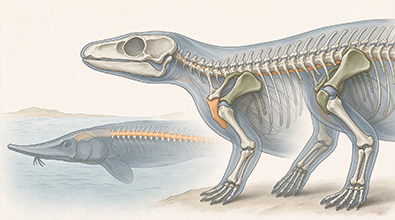 11-02 / 2026Research Highlight: Early‑tetrapod necks did not evolve for head‑turningPalaeontologists long hypothesized that when fish evolved into four‑limbed tetrapods, the separation between skull and shoulder girdle created a flexible neck, enabling early creatures to turn and...
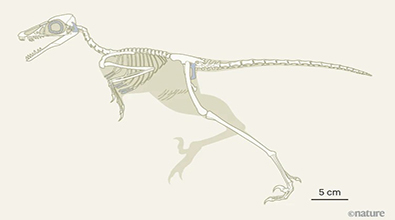 11-02 / 2026Research Highlight: Jurassic Flight‑less Bird Rewrites Early‑Avialan EvolutionChinese palaeontologists have reported a new avialan species Yuezhuornis yangyuanensis from the Late‑Jurassic Zhenghe Fauna in Fujian, southeast China, published in Nature. Weighing around 821...
 08-31 / 2026Research Highlight: 324‑Million‑Year‑Old Amphibious Stem‑Insect Illuminates Insect TerrestrializationAn international research team published findings in Nature, describing a new stem‑group insect Chosha praecursor from the 324‑million‑year‑old Late Mississippian Tesnus Formation in Texas, USA...
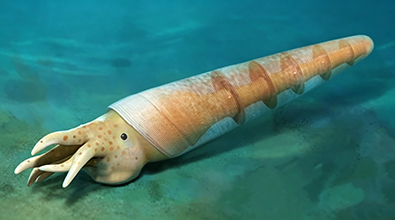 08-31 / 2026Research Highlight: 520‑Million‑Year‑Old Microfossil Pushes Back Cephalopod OriginsAn international research team published in Nature reports Eoceras shaanxiense, the earliest known siphuncle‑bearing cephalopod, recovered from early‑Cambrian Shuijingtuo Formation (about 520 mi...
 06-08 / 2026Research Highlight: Cambrian Fossil Treasure Reveals True Origin of BryozoansExceptionally preserved 520‑million‑year‑old fossils from southern China have finally resolved the evolutionary origins of bryozoans, the only major animal phylum that seemed to have mysteriousl...
 06-08 / 2026Research Highlight: Meat and Agriculture Reshaped Human Tooth Enamel at the NanoscaleA study of 12 primate teeth spanning nearly 18 million years reveals that tooth enamel nanocrystals become more misoriented when diets get harder, including when early humans started eating meat a...